
Business Storage Costs Explained: A Complete UK Guide
Business storage can solve several practical problems. Companies use storage for surplus stock, office furniture, archived documents, seasonal equipment, packaging, tools and temporary space during relocation or refurbishment. However, storage costs vary considerably, so businesses need to understand the complete price before signing an agreement.
This business storage costs explained guide covers the main factors that affect UK storage prices, including space, location, VAT, access, insurance, transport and contract length. It also explains how to compare self-storage with managed or containerised storage and how to reduce unnecessary costs.
The Self Storage Association UK reported 3,143 storage sites and 67.5 million sq ft of storage space nationwide in its 2026 industry report. It recorded average industry revenue of £27.40 per sq ft, excluding VAT. This figure provides a broad industry benchmark rather than a quote for an individual unit, because actual customer prices vary significantly by facility, location, unit size and terms.
Business storage costs explained by unit size
Storage size usually has a major influence on the final price. A company storing a few archive boxes requires far less space than a retailer holding pallets, furniture or seasonal inventory.
The cheapest solution usually comes from accurately matching the space to your real requirements rather than automatically choosing a large unit.
Calculate how much space you actually need
Create an inventory before requesting quotations. Count boxes, measure large furniture and identify pallets, machinery or equipment. Ask providers for help estimating suitable capacity if necessary. Avoid paying for large amounts of empty space, but leave enough room to organise belongings safely and retrieve items when required.
Consider how efficiently you can use the space
Floor area tells only part of the story. Suitable shelving and careful stacking can increase usable capacity without requiring a larger unit. Keep safe access routes and avoid unstable stacks. Businesses that organise inventory efficiently can often use smaller storage spaces while still keeping important products, equipment or documents easy to locate.
What affects business storage costs in the UK?
No single UK business-storage price applies everywhere. Storage operators calculate prices using local demand, facility type, space, access arrangements and additional services.
Location can change storage prices considerably
Storage space in high-demand urban areas can cost more than comparable capacity in less expensive locations. Businesses that rarely visit stored goods can sometimes save money by choosing a facility farther from a city centre. However, frequent travel can create fuel, staff-time and delivery costs, so compare total operational cost rather than rent alone.
Unit type influences the price
Indoor self-storage, containerised storage, document storage and managed storage serve different requirements and can follow different pricing structures. The SSA UK 2026 report notes that container storage accounts for 40% of new store openings, showing how important alternative storage formats have become within the UK market.
Access requirements can affect value
Consider how frequently employees need stored goods. Extended access may matter greatly to an ecommerce business that regularly collects stock, while a company storing unused furniture may rarely need entry. Paying extra for convenient access can make sense when it saves working time, but unnecessary premium access can increase ongoing expenditure.
Self-storage vs managed business storage
Choosing the right storage model can affect both cost and convenience. Do not compare the rental figure without considering how staff will move and retrieve the goods.
Self-storage works well for regular access
Self-storage gives businesses direct access to their allocated space according to the facility’s access arrangements. This model can suit retailers, contractors and companies that regularly add or remove stock. However, the business may need to organise its own transportation, loading, inventory management and staff time for each storage visit.
Managed storage can reduce staff involvement
With managed storage, the provider may handle more of the collection, storage and redelivery process depending on the service. This arrangement can suit office furniture, archives or equipment that employees rarely need. Ask about retrieval lead times and delivery charges because a low storage rate may become expensive if frequent collections create additional handling costs.
Remember VAT when comparing business storage prices
Businesses should establish whether every advertised or quoted figure includes VAT.
HMRC states that supplies of storage facilities generally attract VAT at the standard rate under UK storage rules. The current standard VAT rate remains 20%.
Compare VAT-inclusive costs consistently
A £200 quote excluding VAT becomes £240 when 20% VAT applies. Another provider may advertise £225 including VAT and therefore cost less overall. Check the wording of every quotation carefully and compare equivalent figures. VAT-registered businesses should also consider their own tax position and obtain appropriate accounting advice where necessary.
Do not assume every advertised figure includes everything
Storage advertisements may emphasise rental prices while handling, collection, delivery, insurance or other services appear separately. Ask for the total expected cost based on your circumstances. A useful business-storage quotation should allow you to understand both recurring charges and one-off expenses before you commit to the arrangement.

Additional charges to include in your storage budget
The storage unit itself may represent only one part of your total expenditure.
When comparing quotations, check for:
- VAT
- Insurance or protection requirements
- Collection charges
- Delivery or redelivery
- Loading and unloading
- Packing materials
- Pallets or containers
- Administration charges
- Access-related costs
- Minimum rental periods
- Notice requirements
- Late-payment charges where applicable
Check insurance arrangements before storing valuable goods
Do not assume your normal business policy automatically covers stock or equipment stored away from your main premises. Ask the storage provider what protection arrangements apply and discuss off-site goods with your insurer where necessary. Pay particular attention to stock, electronics, specialist tools and other assets that would cost the business significantly to replace.
Consider transport as part of the storage cost
A cheaper unit can become poor value when employees repeatedly drive long distances to access it. Calculate collection, delivery, fuel and staff time alongside the rental price. Businesses that rarely need their goods may prioritise cheaper locations, while frequent-access users may save more through a convenient facility close to normal operations.
Step-by-step guide to calculating business storage costs
The most reliable approach uses your own inventory and expected storage behaviour rather than generic averages.
Step 1: Create a complete storage inventory
List everything you intend to store and separate stock, documents, furniture, equipment and other belongings. Record quantities and approximate dimensions. Remove obsolete stock and unwanted furniture before estimating space. An accurate inventory helps providers recommend capacity and prevents you from paying to store items that no longer serve a useful business purpose.
Step 2: Estimate the correct storage capacity
Measure larger items and estimate your total boxes, pallets or containers. Explain whether you need walk-in access to individual items or can store goods compactly. A unit packed tightly for long-term furniture storage needs a different layout from stock that employees retrieve every week, even when both businesses store similar volumes.
Step 3: Decide how often you need access
Estimate whether staff will visit daily, weekly, monthly or rarely. Frequent access makes location and opening arrangements more valuable. Long-term archive or furniture storage may prioritise price instead. Understanding your access pattern also helps you decide between self-storage, containerised storage and a managed service with collection and redelivery.
Step 4: Request comparable quotations
Give each provider the same information about space, storage period, item type, access and transportation. Ask for prices including all compulsory charges. Comparing like-for-like quotations prevents a basic storage-only price from appearing cheaper than another quote that already includes transport or services your business actually requires.
Step 5: Calculate monthly and annual expenditure
Add recurring storage charges, VAT where applicable, insurance, regular transport and predictable handling fees. Then calculate the total over your expected storage period. A £20 monthly difference equals £240 over twelve months, so apparently small pricing differences can become meaningful for businesses planning longer-term storage.
Step 6: Read the agreement before committing
Check minimum terms, notice periods, payment arrangements, price-review clauses, access conditions and prohibited goods. Understand what happens if your business needs more or less space later. The cheapest starting rate may not provide the best long-term value when the agreement lacks the flexibility your company expects to need.
How to reduce business storage costs
Businesses can often reduce expenditure without choosing unsuitable or poorly organised storage.
Remove obsolete stock and unused equipment
Review stored goods regularly and identify dead stock, duplicate furniture, outdated documents and equipment the company no longer needs. Sell, recycle, archive digitally where legally appropriate, or dispose of unwanted items responsibly. Paying month after month for assets with no operational value creates one of the easiest avoidable storage expenses.
Use vertical space efficiently
Suitable shelving can improve organisation and make better use of available height. Keep frequently required goods accessible and clearly label shelves, boxes and stock groups. Do not create unsafe stacks merely to save floor space. Effective storage balances capacity with safe handling, stock visibility and practical retrieval rather than maximising density at any cost.
Review your required unit size regularly
Business requirements change. Seasonal stock may decrease, offices may dispose of furniture or a growing company may need additional capacity. Review your space periodically rather than renewing automatically. Moving to a smaller unit when inventory falls can reduce ongoing expenditure, while upgrading before overcrowding can improve organisation and reduce unnecessary handling.
Business storage during an office relocation
Storage can provide a useful buffer when an office move involves different departure and occupancy dates or when the new workplace cannot accommodate every item immediately.
Store non-essential furniture during transition
Moving every desk, cabinet and archive box directly into a new office can create clutter and slow setup. Temporary storage allows businesses to establish essential workstations first and introduce less important furniture later. This phased approach can support a more organised relocation, particularly when refurbishment or layout changes continue after the main move.
Keep essential and stored items clearly separated
Create separate inventories for belongings employees need immediately and items that can remain in storage. Label everything by department and priority. Poor organisation can turn inexpensive storage into an operational problem when staff need to search through containers or arrange extra retrievals simply because nobody recorded where an important item went.
How Going Places Removals & Storage can help
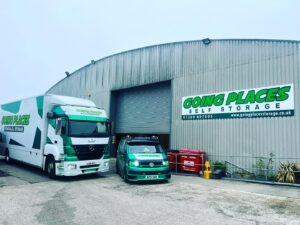
Going Places Removals & Storage currently appears in Cornwall business listings as a Redruth-based removals provider offering commercial relocation together with several storage options. Its published services include commercial storage, containerised storage, document storage, furniture storage, self-storage, short-term storage and long-term storage.
Discuss removal and storage together
Businesses planning relocation can explain both moving and storage requirements during the same conversation. Combining logistics may simplify collection and reduce unnecessary handling where the service suits the job. Provide an inventory, expected storage duration and access requirements so Going Places can explain which of its listed removal and storage options may suit the situation.
Confirm individual storage terms before booking
A public service listing confirms that Going Places offers various storage types, but it does not mean every option follows the same pricing, access or contract terms. Ask for a quotation that explains your actual service, duration and additional charges. Confirm insurance arrangements, access, collection and redelivery according to your business requirements.
Why compare complete storage services rather than price alone?
Good business storage needs to support operations as well as fit the budget.
Security and suitability matter
Ask providers how their storage arrangements suit the type of goods you need to keep. Valuable stock, documents and sensitive equipment can have different requirements. The SSA UK reports that 90.8% of stores surveyed in 2026 use monitored CCTV, showing how common security technology has become across the sector.
Flexibility can create long-term value
A provider that lets your business adjust capacity as requirements change may offer better value than a rigid low-price agreement. Ask whether you can change space, extend storage or arrange retrieval when needed. The best business-storage decision balances rent with accessibility, logistics, protection and flexibility rather than simply choosing the cheapest monthly figure.

FAQs About Business Storage Costs Explained
1. How much does business storage cost in the UK?
There is no single UK price because location, unit size, storage type and access all affect quotes. SSA UK’s 2026 report records average industry revenue of £27.40 per sq ft excluding VAT, but this figure represents an industry benchmark rather than a customer price list. Request current local quotations for accurate budgeting.
2. Is business storage cheaper than renting a warehouse?
Storage can cost less for businesses that need limited space without committing to a complete warehouse. A warehouse may involve rent, utilities, maintenance and other property costs, but it can provide operational space that storage cannot. Compare your required capacity, staff access, stock activity and contract duration before choosing between them.
3. Does business storage include insurance?
Not necessarily. Providers use different arrangements, and your existing business insurance may have conditions for stock or equipment stored off-site. Ask what protection the storage agreement includes and what cover you must arrange yourself. For valuable goods, confirm the relevant limits and exclusions before placing the items into storage.
4. Can businesses reduce storage costs?
Yes. Remove obsolete stock, choose the correct storage size, organise vertical space, compare locations and review your needs regularly. Calculate transport and access costs as well as rent. Longer-term arrangements may offer different pricing, but businesses should compare the full term rather than focusing only on introductory discounts or headline monthly rates.
5. What should I ask before booking business storage?
Ask about total price, VAT, insurance requirements, access times, minimum terms, notice periods, security arrangements, collection, delivery, prohibited goods and possible price changes. Confirm whether the quoted rate represents the complete recurring cost. Getting important details in writing makes quotations easier to compare and reduces unexpected charges during the storage period.
Final Thoughts
Understanding business storage costs explained means looking beyond one advertised monthly figure.
Storage size, location, access, VAT, insurance, transport, storage type and contract terms can all influence the real cost. The UK self-storage market also continues to evolve: the SSA UK 2026 report records 3,143 stores, 67.5 million sq ft of capacity and £1.3 billion in annual industry turnover.
Start with a detailed inventory. Decide how often employees need access, obtain comparable quotations and calculate the total cost over the full storage period. Remember that HMRC generally treats storage facilities as standard-rated for VAT, so confirm whether advertised business prices include the current 20% rate.
Going Places Removals & Storage currently lists commercial, containerised, document, furniture, self, short-term and long-term storage among its services in Cornwall. Businesses considering the company should discuss the exact items, duration, access and transport requirements before booking.
Ultimately, effective business storage is not about finding the smallest headline price. It is about paying for the right amount of space, access and logistical support while avoiding costs your business does not genuinely need.
Find Top-Quality Moving Services with Going Places Removals Near You
 Unit 1, Duchy Business Centre,

